



And I heard a voice in the midst of the four beasts
And I looked, and behold a pale horse:
And his name that sat on him was Death
And Hell followed with him

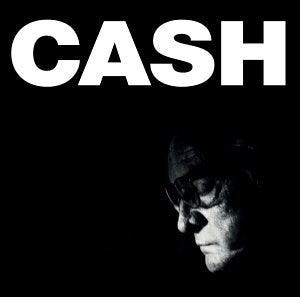
— Johnny Cash, “The Man Comes Around” from American IV: The Man Comes Around
And his name that sat on him was… Macro Conditions?
When is your startup’s failure your fault?
Saying your startup failed because of macroeconomic conditions is a bit like saying your marriage failed because being married is hard. Yes, but is that really all the analysis you’ve got handy? It can’t all be the business cycle and macroeconomics, right?
Of course businesses are affected by the largest trends affecting stocks and flows of all things. But not all of them fail nor do all of them succeed under the same conditions. So how are we meant to attribute praise and blame when business cycles can and do make things easier and harder depending upon when you catch them?
One startup cliche is that when macro times are good, the VCs on your board will tell you to grow as fast as possible and to spend the money you’ve raised. Don’t worry about profitability. Worry about scale. But then, the Fed will raise interest rates, or there will be a major energy crisis, and your investors will say “cut staff, get to profitability, stay alive.” This is a predictable enough pattern that it is the job of the CEO to avoid putting butts in board seats who think this way. Or, if one must accept the funds attached to those butts, to resist their urging to spend faster and then need to cut deeper when the time comes—manage them effectively and set expectations. Failure to do that gets blamed on macro conditions, but it was really an issue of CEO experience or courage.
Zoom as a dang lucky rentier
Here’s another example: was Zoom betting on a pandemic making video conferencing from home the new default? My guess is not. They probably were just anticipating that labor competition and improving connectivity would long-term make remote work more likely. Anyone who bet on more than that should have their pockets checked for copies of Catcher in the Rye.
The pandemic working for them so well feels so random as to broadly be unfair. It probably felt and still feels that way to the developers of commercial real estate. And it is unfair in the same way that Georgists claim that someone who owns an apartment building which appreciates due to a city adding a new subway stop beneath it should not be entitled to rise in rents and overall valuation. It is manna from heaven, and that should be distributed to all and not hoarded by the lucky few where the manna fell hardest. They are collecting unearned rents in the classical political economic sense, and thus are the quintessential bad guys of Georgism: the rentier.
And now that I’ve mentioned Georgism, surely I will get some extra impressions because they are an obsessed bunch—the biochar gang of political economy. No shade, they’re enthusiastic, let’s say.
Climate tech, the business cycle, and you
But I’m getting away from the core here. Today’s submission to Climate Workers Anonymous is about what to do with macro conditions and the business cycle from within your particular climate tech or carbon dioxide removal company.
One part of it is about offering grace to one another and ourselves. It’s hard to go wrong in over-applying grace. But another part of it is an encouragement to remain counter-cyclical. If everyone is panicking, you be the calm one looking for acquisition and growth opportunities. If the good feelings of the endless summer of expansionary times are being felt by all, you be the cautious one and note that this too shall pass. If you believe what everyone else believes, you will broadly end up in the same place. And if you lead a company, your job isn’t to end up with everyone else (or at least under capitalism as normally played.) So you should have a counter-cyclical default at least as one way of seeing among many.
But for your own sake, it doesn’t need to be the only tool you have. If it is, it’s no longer the millstone as a the tool but a millstone as the sinker around your neck. Having only one cognitive tool and overapplying it is one of the ways one can end up in crackpot territory. Be advised!
Submission(s)
It's really interesting seeing a slice of the business cycle, where periods of growth are followed by periods of contraction, play out in real time in carbon removal if not climate tech overall. It almost feels like it emerges from bottom-up psychological and economic forces. There may be some big, exogenous developments and flashy players (the Bipartisan Infrastructure Law and major buyers and startups entering the scene), which lead to hype and a gold rush (the 2022–2024 carbon removal boom), followed by contraction and consolidation once the space realizes it grew too much too quickly (the current situation).
This is definitely not a new realization by any means. We've known about the business cycle for years, there's the Gartner hype cycle, and commodities like oil have been known to involve highly cyclical markets. Carbon removal is like a commodity in important respects and is thus perhaps doomed to repeat this cycle over and over again, hopefully with an underlying trendline of sustained growth.
If any of this is true, and if we think too much volatility is not helpful for the sector, then maybe we all need to take steps at the individual level to reign in heavy-handed responses to being at different places in the cycle. E.g., maybe when times are good, we need to be more conservative and not overextend ourselves/our businesses, and maybe when times are bad, we should try to ride out the storm and not become overly pessimistic, knowing that better times are ahead.
Sensible advice and a reminder that while it isn’t your fault what happens with the business cycle and macroeconomic conditions generally, it is your responsibility to set your company up to survive them.
Thank you for listening to and reading Climate Workers Anonymous. Subscribe to Substack below, and be sure to subscribe in whichever podcast app you use. An amazing rating and review on those podcast apps does a world of good. Would you please do that for me now? Here’s Apple Podcasts, Spotify, and YouTube.
If you’d like submit your anonymous hopes, fears, or experiences to Climate Workers Anonymous, you can use this Tally survey or email climateworkersanonymous[at]protonmail.com, though I believe the Tally survey is more secure. Do not communicate anything you wouldn’t want a hacker to have access to, including an email address that could be linked to you if you email the account on Protonmail.
Full Transcript
Ross Kenyon: This is Ross Kenyon. I’m the curator of Climate Workers Anonymous. Thanks for listening to this show or reading it. If you are on Substack right now, this show is both on Substack as a written publication and also as a podcast.
If this is your first time here, Climate Workers Anonymous is a show which features anonymous and unverified submissions from those working in climate. There are things that people would like to share that they don’t feel comfortable sharing under their own name. They submit via form, which is in the show notes here. If you click, or if you’re on Substack, if you go read the article on the Climate Workers Anonymous publication, you can click on the link to Tally and that will help you submit your anonymous take.
If it wasn’t clear for me saying anonymous several times in a row, I will state it more plainly, which is: do not provide information which may be revealing as to who you are.
Most of the people I know who work in climate are here because they care about the impacts of climate change, and they are watching what is happening to the world and it is terrifying. I come from the world of carbon dioxide removal, so I imagine many listeners and submitters probably come from over there. Has not been a great time for CDR. But also, some people choose to hope, and have to keep hoping, if we are trying to will a better world into existence. Maintaining that hope, not falling into an inactive despair, is possible.
And my intention with Climate Workers Anonymous is to help enable people to share those things, to get them off their chest, to help process them, both for their own mental health and also because our industry, like any industry, needs to tell the truth about the work. There’s a lot of persona in business and in climate, and holding a mask up makes your arms tired.
Lately I’ve been doing one submission per episode, and I’m going to keep it that way for now. I think it makes it easier to focus on a theme and play with it a little bit. It isn’t always as easy with several at once. That means that sometimes there’s a backlog of submissions that have not been published yet, but I’ll get there. Unless at some point there is a watershed moment in the show where there’s just dozens or hundreds of these things that pile up every week. But I don’t see that yet, so we’re going to stick with one for now.
This submission is about the macro effects. It’s funny that this arrived, because I was just working on a meme, the punchline of which—what’s the like Johnny Cash thing where he’s like, “And on the pale horse was a rider, and the rider’s name was Death”? But in my version of this, if this was memed, the rider’s name would be Macro Conditions. It would be coming for all those startups who were not prepared, because macro conditions will come like a thief in the night.
It is funny to blame macro conditions, because the job of the entrepreneur is to trim one’s sails to the conditions that are on the water that day, not the conditions that you wish were there. And sure, there can be black swan events. Something real bad can come out of nowhere that was not predicted. But blaming macro conditions, I think, is like saying, well, why’d you get divorced? Because it’s hard to stay married. It sort of explains everything, but also nothing at the same time.
This submission has a different take on those macro conditions, and I’ll read it now. Submission one, and there’s only one.
It’s really interesting seeing a slice of the business cycle where periods of growth are followed by periods of contraction play out in real time in carbon removal, if not climate tech overall. It almost feels like it emerges from bottom-up psychological and economic forces. There may be some big exogenous developments and flashy players, parenthetical, the bipartisan infrastructure law and major buyers and startups entering the scene, end parenthetical, which lead to hype and a gold rush, parenthetical, the twenty twenty-two to twenty twenty-four carbon removal boom, end parenthetical, followed by contraction and consolidation once the space realizes it grew too much too quickly, parenthetical, the current situation, end parenthetical.
This is definitely not a new realization by any means. We’ve known about the business cycle for years. There’s the Gartner hype cycle, and commodities like oil have been known to involve highly cyclical markets. Carbon removal is like a commodity in important respects and is thus perhaps doomed to repeat the cycle over and over again, hopefully with an underlying trend line of sustained growth.
If any of this is true, and if we think too much volatility is not helpful for the sector, then maybe we all need to take steps at the individual level to rein in heavy-handed responses to being at different places in the cycle. E.g., maybe when times are good, we need to be more conservative and not overextend ourselves/our businesses, and maybe when times are bad, we should try to ride out the storm and not become overly pessimistic, knowing that better times are ahead.
End submission.
Do you ever feel yourself being pushed around by history? I didn’t always feel this way. Some part of that might be privilege. Some part of it might just be nationality. Being an American means you’re babied by two oceans. Don’t have to think as much about that, perhaps, as others do. But once you do work in a politically vulnerable, monopsonistic sort of buying environment like carbon dioxide removal, one has to pay more attention to that than perhaps one ever did. And maybe the times when you thought you didn’t need to pay attention to those macro conditions, that’s less true these days.
The obvious examples are what’s going to happen with Iran and with energy prices, but also what’s going to happen with AI. Like, for instance, I saw that Stripe had a deal memo that someone leaked saying that we’ve entered the singularity. The Collisons, you know, big supporters of carbon dioxide removal. If they’re calling that one, then what don’t I know? And how is that going to impact us? And we were only thinking so far about what really effective AI was going to do to our careers, our political economy, and our lives. We weren’t thinking about what it might be like if a superintelligence was very nigh upon us.
And so if you do not consider yourself to be a historically situated actor, maybe just meditate on that a little bit today. It’s easy to forget, because our lives feel so real to us, but maybe sink into that one a little bit. It’s a useful way of seeing.
Thanks so much for listening. You can subscribe on Substack, which is so appreciated by me. A great rating and review in Apple Podcasts or Spotify, so appreciated. Share this out with your network. Submit at the links. You can find the links in the show notes of the podcast, or inside of the Substack article itself. Thanks for listening to Climate Workers Anonymous. I am Ross Kenyon. I hope you have a wonderful day.


