



We’ve barely even started Climate Workers Anonymous and I’m already receiving such challenging and intriguing pieces of feedback, and so many submissions. Thank you to everyone who has participated to date and taken time to share something real with this project.
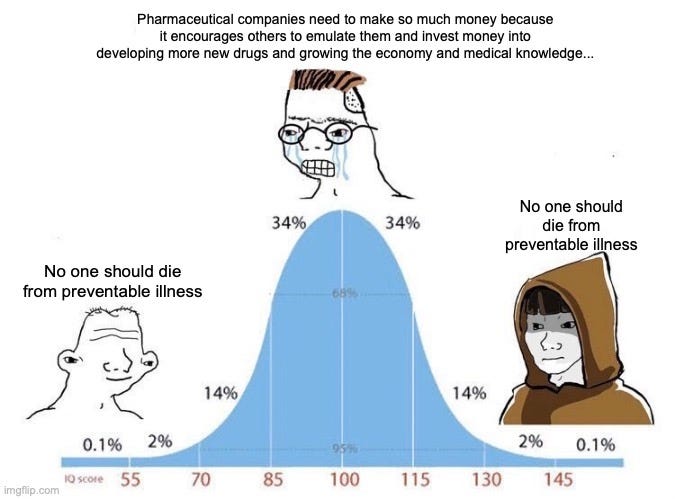
A friend of mine wrote me right before I recorded this episode and mentioned that he wanted fewer hot takes and more stories, and emotional content beyond anger. It set me to thinking about anger and how I understand its usefulness or lack thereof.
Anger can be a legitimate response to the unfairness of external results. It can be something pointed inward to something that needs psychological and/or spiritual attention.
If Christian, anger at others can be the ethical equivalent of murder. Jesus takes the old laws here and makes it so much more demanding:
21 Ye have heard that it was said of them of old time, Thou shalt not kill; and whosoever shall kill shall be in danger of the judgment:
22 But I say unto you, That whosoever is angry with his brother without a cause shall be in danger of the judgment: and whosoever shall say to his brother, Raca, shall be in danger of the council: but whosoever shall say, Thou fool, shall be in danger of hell fire.
— Matthew 5:21-22, King James Version
If Buddhist, anger points to thwarted desire, and the need to eliminate that desire.
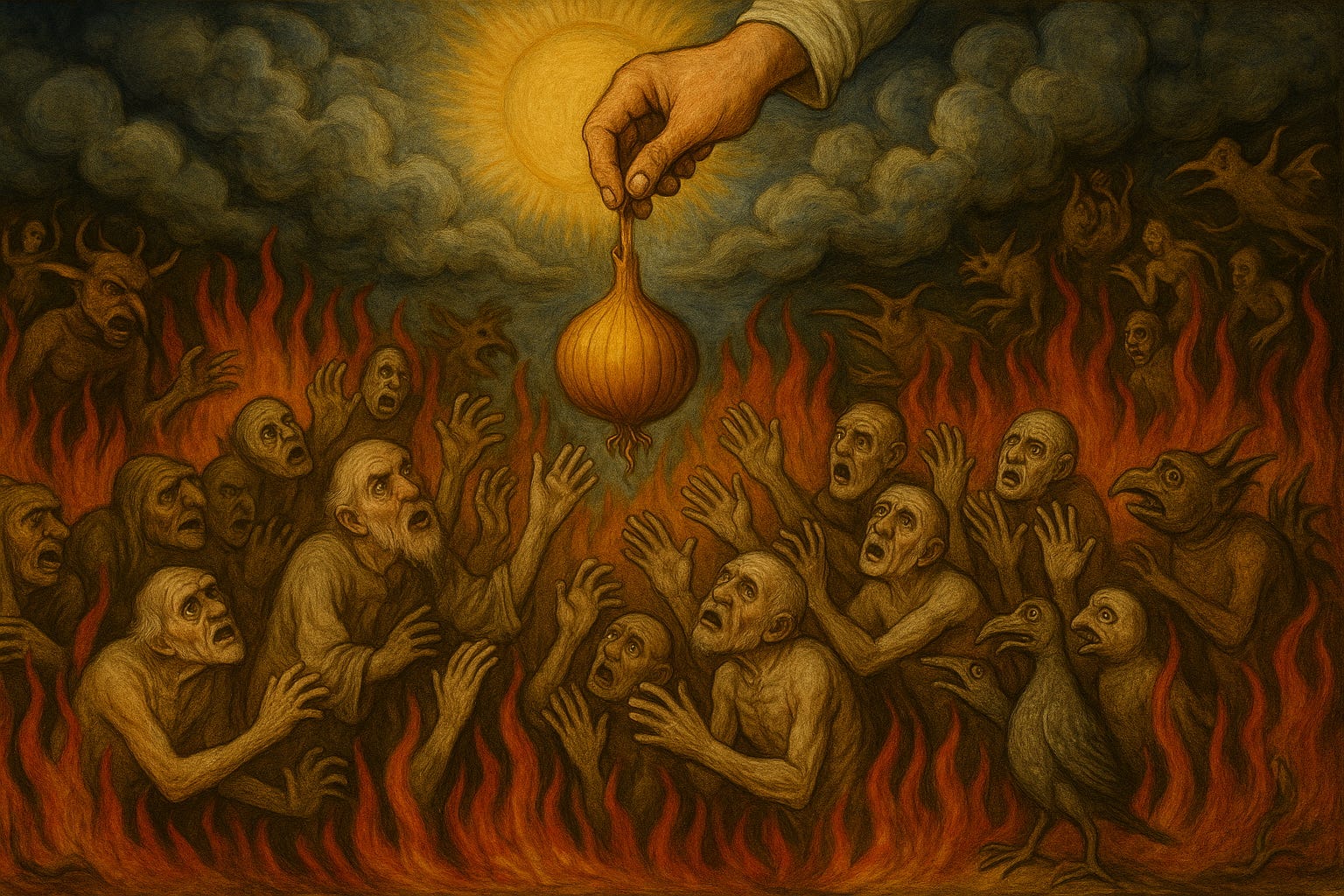
Or, anger can be sublimated sadness. What might be tears may start as fury. Sometimes people need to work their way through the anger to get to the well of despondency below. In climate, this is often a deep disappointment that we just cannot get our act together as a species. It is hard living with that fact. When I get past my own anger, what is down below is a plaintive child earnestly yearning for all of humanity to live well together and to treat one another with the kindness, patience, and mercy. We could have that world. And yet, we have chosen something so much worse. These thoughts point me to the puzzles of akrasia, and what causes us to choose something inferior as though this is all we might have, deserve, or just be capable of.
That simpleness is deceptively difficult to reach. I think it’s actually the point of this passage from the Gospel (not to be too Bible-y today, but if the shoe fits…)
18 At the same time came the disciples unto Jesus, saying, Who is the greatest in the kingdom of heaven?
2 And Jesus called a little child unto him, and set him in the midst of them,
3 And said, Verily I say unto you, Except ye be converted, and become as little children, ye shall not enter into the kingdom of heaven.
4 Whosoever therefore shall humble himself as this little child, the same is greatest in the kingdom of heaven.
— Matthew 18: 1-4, King James Version
Earnestness and simplicity are so jarring that I spent a decent chunk of time being wowed by just how simple John Green ’s book Everything is Tuberculosis is in a recent Reversing Climate Change episode.
While we are seeing a lot of submissions that have the cut of anger about them, that’s okay. Anger isn’t a false emotion. Suppressing it isn’t the answer. But I do think we want to process through anger into what lies beyond.
This is not to discourage anger in your submissions—that likely needs to be expressed. But I would encourage you not to stop there. Feel what is beyond anger. Try to talk about that. Send me of your experiences in working through anger and accessing a different part of your relationship to climate.
If you do experience sadness and struggle with anger, go the opposite direction! Maybe you have been pushing your anger down. But it’s okay to be angry about climate and the direction of the world. You can share that here too. Perhaps this didn’t come through as strongly in the audio version of this episode, but we need you to feel those feelings that have been inaccessible or difficult to express as well. That is equally a part of this.
It isn’t exactly clear what the ultimate shape of this project will be. If you have an intuition that you should send something in, please do. Don’t let my prompts prevent you from saying something true. If I am able (and I really do try to pass along all of the submissions), I will help you say your true thing.
Submissions
Warning: these submissions are anonymous and unverified.
Even with all the BS in the carbon removal industry, I do believe deep down that society will one day achieve net-negative emissions each year. Even if it's a small amount, and even though there will be unfathomable and irreversible damage to the planet in the meantime, the cumulative impact of this across centuries will be beneficial.
Our main challenge in some ways is to figure out how to prevent this promise from being used in any way to deter mitigation. With some emotional maturity, I think that's possible, but many people disagree.CDR is not bipartisan for a good reason
I don't think the unit economics of e-fuels will every really pencil but I'm also worried about the risks and harms from continuing business-as-usual use of fossil fuels paired with carbon removal. But will electrification, efficiency, and demand reduction be enough for net zero? Sometimes, I just don't know and feel like it's not knowable and that we need to throw everything at the wall and see what sticks. But that approach creates ripe conditions for fraudsters... Grrr
Consolidation in climate tech will be healthy. Founders will need to put their egos aside for a more peaceful process, however.
I think a lot if not most of the proposals being put forward right now to reform corporate carbon accounting standards are really just a race to the bottom and dilution in disguise. And I'm not sure the people promoting these changes would even be able to realize if this is the case.
Many folks I work with (across sectors in corporate climate strategy) are understandably concerned about about rising temperatures. Yet many of those same people escape from the city to the countryside for a break from the heat, while their investment portfolios grow through holdings in real estate, construction, and infrastructure that are doubling down on urban development with a hint of "green" that checks a few ESG boxes.
Where's the climate science newsflash about pavement and urbanization as major causes of both warming and flooding? When I raise this with my climate colleagues — who are hyper-focused on carbon accounting, and not yet ready to question the logic of their paychecks — I'm teased as a climate denier.
But to me it's like accounting and reality broke up a while ago and everyone forget they ever had a relationship.mCDR researchers insist that open, transparent data sharing is critical to ensure that field trials are conducted safely and responsibly. But you know who actually digs up this data and stops to ask about it? Undergrads. Business developers. Engineers. Not the oceanographers and biogeochemists who are often the loudest voices of concern for potential negative impacts.
That’s a real problem. We need real leadership to understand how mCDR is developing and to drive consensus on how it should be done— and that can’t come from the scattered workshops and slow publishing that is comfortable to marine scientists.I'm tired of the fake concern for the planet from most people in the CDR/ climate space. I worked for [a climate tech market intelligence company and the C-suite and marketing leadership kept flying between major cities without a care in the world about emissions.]
They gave a f*** about emissions. They started the company because they had the skillset to build such a platform. Period. There was no love for the planet there.
Similarly, CDR developers rushing to NYC/London climate week by taking a flight is ridiculous!!
You are contributing to the very problem you are trying to avoid/remove.
I also get it that meeting in person is needed but I think people should participate in local chapters instead.
Linkedin is rife with people trying to show that they are participating in these events like its a cool thing, like going to an exclusive invite-only party or something.
Point 2 from the anonymous feedbacks you received is very true. We are all screwed. I'm in fact buying a house in a city which has a river nearby so that when a drought hits, I might have some water for my baby. Ugh!!
Accidental Modest Mouse was indeed accidental, but coincidentally, I saw they just released a new album for the first time in a while.
Elder millennials, RISE UP.
Also, stay tuned for an episode of my other podcast, Reversing Climate Change, which will soon feature a fuller exploration of the Bhagavad Gita.
Full Transcript
Ross Kenyon: Hello. Thanks for listening to Climate Workers Anonymous. This is Ross Kenyon. I am a climate worker and the curator of this collective art project.
I have been receiving a lot of correspondence about this project. I will say, I received a thoughtful message only a few hours before recording this, from a friend of mine, saying that they had hoped that this project would not duplicate the bad parts of the anonymity of the internet, which is that people can be critical without having to stand behind their criticism. This type of anonymity can also be emboldening of sort of the worst parts of mob-like behavior. This may in fact promote less accountability and less truth-telling, but encourage the vicious parts of ourselves to come out, let loose, say something nasty, and then retreat back without allowing the person or group or holder of the belief that’s being challenged to ever truly face their accuser.
This comment made me think so much of PostSecret, the art project that Climate Workers Anonymous takes its inspiration from. I associate it with the aughts, you know, 2000s, MySpace days, early social media, where the primary way of relating to people was still goofing around in your cul-de-sac, longboarding down a big hill with some friends, playing basketball, going trick-or-treating, playing music, things like that, that in many cases, at least by all the data I’ve seen, is in great decline.
In the aughts, in the MySpace days, in the PostSecret heyday, where most of our interaction was still unmediated by technology, maybe we needed a little bit more anonymity in order to be truthful. I’m not sure that those same conditions hold two decades later. Now it seems that so much of our behavior is online, so much of it is anonymous, that we’re actually trying to recover more authenticity and accountability, and that means showing up to your PTA, helping your neighbors, being involved in things that include moving your body to a different location, things like that.
This person’s request was to spend more time sharing emotional stories rather than hot takes, and I’m not sure exactly what to make of that request. When I think about anger and the nature of anger, there are a few big ways that I understand it. Perhaps the first is that anger is a legitimate response to perceived unfairness, disadvantage, dishonor, and we shouldn’t try to just shove that down right away. If anger exists, it likely points to something real that is external. Maybe a situation is genuinely unfair. Or it might point to something internal: why is this response provoking me to anger? And that opens up about a thousand questions that can be unpacked in therapy or with a member of clergy for a very long time.
And once you start going down the metaphysical, ethical nature of anger, you end up in a space of, when is anger justified? Should we have anger at all? If you take it to its most extreme, you can have someone like Jesus saying that merely calling someone Raca in your heart, privately, call them a jerk or a fool privately, don’t even say it out loud, is functionally equivalent to murder. When you are angry at someone, when you feel hate and you let those feelings rise in you, the difference may be one of degree between actual murder, but at least within this portion of Christian theology, in terms of kind, they are the same.
If you’re Buddhist, you might interpret anger as being a reaction to your desire, which has been thwarted, and the way to handle that, as you probably know, is to let go of desire. It’s hard to be angry if you aren’t rooting for a specific outcome that you would very much want.
One way that I think about anger, which may be useful here, is that anger is sublimated sadness. If we could get past the defensiveness, the fury that comes along with anger that’s often pointed outside, in many cases there are tears lurking behind the anger. And as people are learning to deal with emotions, that might require some amount of processing through anger and trying to get to the wounded, vulnerable sadness underneath that anger.
And so when people are submitting comments that strike me as somewhat angry or truly angry, I’m wondering if there’s not a core of sadness that’s in there somewhere, right below that anger. Maybe it coexists with the anger. Maybe when some people wrote this, their ire was up for some reason, and maybe if they had the same prompt when the cortisol was not flowing in their blood, maybe they would have given an answer that was more sad.
I’m not entirely sure how to deal with this editorial note. I’m grateful for receiving it. If you have feedback about how to make this show better, the kinds of submissions you’d like to hear more of, one solution here is encourage them to duplicate your efforts, and I agree. I really don’t want this to be a place for people to only leave criticisms, only leave their negative or sad feelings.
And actually, I have some submissions this week that I’m about to read that do feel emotionally different from what I just described. There’s some stories of hope against hope. Maybe it’s not how you wanted it to be, maybe it’s not how you expected it to be, but you’re still here and you’re still doing the work, and you still are showing up over and over and over again trying to make this work. And I think stories like that can also be really valuable, and also hard to share under some circumstances.
I think being in a meeting and saying, this work is so hard that sometimes it’s challenging just to keep going every day and just to keep coming back for more with this. I think if you said that and your boss was listening, their ears might perk in a way, unless you had a very wise boss, it may not be ideal for you. So I think that’s just as brave and just as important. And don’t feel like you have to only send in your spicy little hot takes, because as much as I like supplying some hot takes, and I am certainly guilty of having supplied a fair number of those, I think you can also look for what’s an undersupply right now and try to find ways to make your contribution something that culturally is bringing something else to the table.
The answer to an inconsolable pessimism is not Pollyanna, is not an unrealistic optimism. I’m not even sure that it is a realistic optimism. I’ve been rereading over and over the Bhagavad Gita and various translations recently. I’ve been interested in that book for a very long time, and one lesson from it that sticks with me is that the correct way to do action is to detach yourself from the results. You have the right to work, but not the right to its results. You do the work because it’s there to do and it’s yours to do. Beyond that, any expectation put on it can only be distorting of the dignity that can come from doing good work for its own sake.
Are we going to figure this all out with climate, and dare I say the polycrisis? I don’t know. I do the best I can, my own little way, and that’s all that I can really do, or anyone else can really do either. Working in that way likely does have some sense of optimism, but there can also be some form of productive non-dualism, I think, within that kind of mindset too. You do the work because it’s good and it’s there to do, and moreover it is yours to do. And even if things turn out a bit too heavy, we’ll all float on.
All right. Oh man, I started this by talking about being an elder millennial and then I quote that Modest Mouse song. I think it’s just time to read submissions. I don’t know that there’s a way back into monologue from there, so I’m gonna go right into this now. You’re welcome, or sorry, or both. I don’t know what else to say to you.
All right, submission time. And here is submission one.
Ross reads the first submission in full at this point. It is the text of the post above, from “Even with all the BS in the carbon removal industry” to “With some emotional maturity, I think that’s possible, but many people disagree.”
Submission two.
Ross reads the second submission in full at this point. It is the one line in the post above: “CDR is not bipartisan for a good reason.”
Submission three.
Ross reads the third submission in full at this point. It is the text of the post above, from “I don’t think the unit economics of e-fuels” to “that approach creates ripe conditions for fraudsters… Grrr”.
Gosh, trying to make me make animal sounds. I have to do onomatopoeias now too. Sorry, that’s my comment.
Submission four.
Ross reads the fourth submission in full at this point. It is the text of the post above, from “Consolidation in climate tech will be healthy” to “put their egos aside for a more peaceful process, however.”
Submission five.
Ross reads the fifth submission in full at this point. It is the text of the post above, from “I think a lot if not most of the proposals being put forward right now” to “would even be able to realize if this is the case.”
Submission six.
Ross reads the sixth submission in full at this point. It is the text of the post above, from “Many folks I work with (across sectors in corporate climate strategy)” to “it’s like accounting and reality broke up a while ago and everyone forget they ever had a relationship.”
Submission seven.
Ross reads the seventh submission in full at this point. It is the text of the post above, from “mCDR researchers insist that open, transparent data sharing is critical” to “the scattered workshops and slow publishing that is comfortable to marine scientists.”
Submission eight.
Ross reads the eighth submission in full at this point. It is the text of the post above, from “I’m tired of the fake concern for the planet” through to “when a drought hits, I might have some water for my baby. Ugh!!”
Okay, that’s all I got for today. Thanks for listening. Thanks for sharing too, I really appreciate it. I like having all the takes. I’m trying not to editorialize and say which ones that I strongly agree with or which ones I might disagree with. I don’t think that’s the point, and moreover, I don’t really want to be in that position.
If you’d like to submit your own feelings, stories, things that you don’t feel like you can really share publicly in the way that you might like, there’s a Tally link to do so in the show notes. You can send us in with that attribution.
And in that same theme, I am unable to verify any of this information. I am not an investigative reporter. I am not finding ways to corroborate these stories and make sure that what they’re pointing to is true. I do the best I can and assume that people come in good faith here and have something sincere that they would like to say.
If you’ve submitted and haven’t heard yours read yet, it’s either in the queue for the future, it barely missed the cutoff for this episode, or maybe I’m thinking about it. Some of them I’m trying to think really deeply about how to share in a wise, compassionate, decent way that I would be proud of, and sometimes that means that it doesn’t just go out in the order in which it was received. I hope that can be understood, maybe even respected.
Thanks for being a part of this collective art project. This is Climate Workers Anonymous. I am the curator of this show, Ross Kenyon. Be sure to follow the project on Substack. You can see all this written down, it isn’t just me reading it. That’s where this podcast is hosted, so there’s a lot more involvement over there. Thanks for listening. I hope you have a wonderful day.


